Home
Follow us
Our Newspapers
Bayside Times
  • Oakland Gardens, Bay Terrace
Little Neck Ledger
  • Douglaston, Glen Oaks, Floral Park, North Shore Towers
Whitestone Times
  • College Point, Malba, Beechhurst
Flushing Times
  • Auburndale, Kew Gardens Hills, Fresh Meadows
Jamaica Times
  • Hollis, St. Albans, Cambria Heights, Springfield Gardens, Rosedale, Richmond Hill, Laurelton, Queens Village
Forest Hills Ledger
  • Kew Gardens, Rego Park, Maspeth, Glendale, Middle Village, Woodhaven, Ozone Park, Howard Beach, Ridgewood
Astoria Times
  • Long Island City, Woodside, Corona, Sunnyside, Elmhurst, East Elmhurst, Jackson Heights
Investigative reporting
Shots in the Dark
  • Telling the stories of communities wounded by violence.
Blogs
No Holds Barred
  • With Ken Kowald
  • Queens Campaigner
    • Covering the political races that matter to Queens.
QGuide
Columns
Topics
Calendar
Classifieds
Special sections
About us

Former LIRR employee writes Jamaica station history

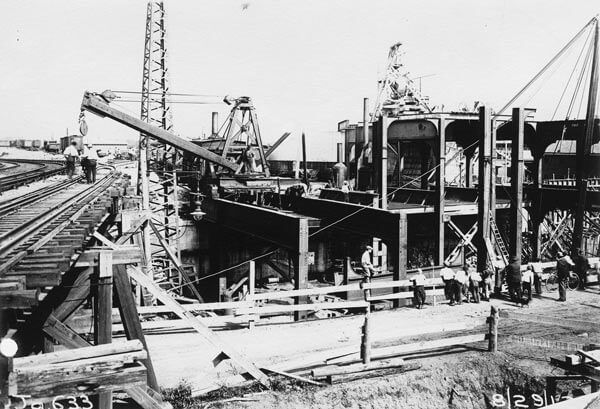
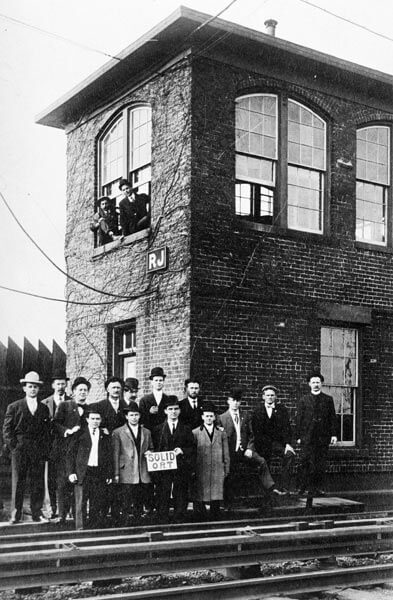
This photo featured in a new book about the Jamaica LIRR station shows the construction of the elevated track near the Van Wyck Viaduct. Photo courtesy of Arcadia Publishing
TimesLedger Newspapers

For most commuters, the Jamaica Long Island Rail Road station is just a simple hub that gets them to Long Island and Manhattan, but train history buff David Morrison said the location is one of the most historically significant places in the city.

Morrison, 66, who used to work at the station as a LIRR station manager, spent several months chronicling the creation and legacy of the Sutphin Boulevard hub and presented his work in the new book “Images of Rail: Jamaica Station,” which hit bookstores last week.

Morrison, who lives in Plainview, L.I., said he has always been interested in the history of the nation’s railroad system, particularly in New York. He was surprised by some of the information he found about the station during his research and said readers will get new insight from the images in the new addition to Arcadia Publishing’s “Images of America” series as well.

“I think they can take away the fascinating story of the development of the station and the building and the importance of the Jamaica station not only to the LIRR, but also the community of Jamaica,” he said.

The station was built in 1913 when the LIRR was expanding its services in Queens and other parts of Long Island and was looking for a bigger location for its offices. The photos in the book show the construction of the elevated track, building and other aspects during different parts of the work.

“As part of the Jamaica Improvement Project of 1913, numerous grade crossings were eliminated by girder bridges or cement archways,” Morrison wrote in a caption for one of the photos.

The author said he had some of the photos from an earlier history project in anticipation of the station’s 75th anniversary in 1988, but he was able to get more photos for the book from fellow LIRR retirees Arthur Huneke and Carol Mills.

Morrison, who helped to form the LIRR historical society, said the pair helped him trace another integral part of the station’s creation — the men and women who were the brains behind the construction.

“In 1987, when we were researching the history, I don’t think any thought was given into who the chief engineer and chief architect were,” he said.

He showcased their work in the book’s final chapter, “The Employees Who Make Jamaica Work,” which features portraits and personal photos of the LIRR crews. Morrison said the people who contributed to the birth of the station also had an impact on other borough sites.

Kenneth M. Murchison, the station’s chief architect, also designed the West Side Tennis Stadium in Forest Hills.

“It’s always nice to do research when you look for things that you know are there, but then you find things you never knew about,” he said.

Morrison said the station’s legacy is just beginning. With the addition of the nearby AirTrain terminal and new commercial development in the downtown Jamaica area, the author said neighborhood builders look at the station as the anchor for Jamaica.

“It’s a continually developing story and it’s part of Jamaica’s heritage,” he said.

Reach reporter Ivan Pereira by e-mail at ipereira@cnglocal.com or by phone at 718-260-4546.
Reader Feedback

john from patchogue says:
i would like to see old pics of the elevated 2nd ave el that went from manhattan into queens. if you look hard, you can still still see parts of the old el still intact on the 59th street bridge:manhattan and queens side
Nov. 26, 2011, 10:44 am
Chris. Swendsen says:
When you talk about the history of the LIRR, you should mmetion that the Pennsylvania Railroad which owned the LIRR did a better job in operated it. In 1928 the Pennsylvania Railroad operated a through Parlor between Montauk and Washington DC. The LIRR offered more direct through train service between Penn Station and Montauk during the weekends during the summer months. The LIRR was able to this by changing from steam engines to electrical locomotives at Jamaica.
So why cann't the MTA. have Metro-North combin trains from its. Upper Hudson Division with that of a LIRR non electrifed line via Penn Station for better train service to a
Manhattan Railroad Terminal and to make both railroads more efficient.
Nov. 26, 2011, 6:43 pm
joe from queens says:
metro north and long island railroad use different configurations on there 3rd rail shoe setups one uns on top one runs on bottom too much money to make the same. since all the commuters complain allready about the cost
Nov. 26, 2011, 8:20 pm
chris swendsen says:
Metro north and long island railroad do use different configurations on third rail shoe setups
However the MTA, should still have Metro-North combine trains from its. Upper Hudson Division with that of a LIRR none electrified line via Penn Station for better train service to a Manhattan Railroad Terminal. This would make both railroads more efficient. In the 1990’s Amtrak operated a through train from Albany to Shea Sedum Station on the LIRR Port Washington Branch, known as the Baseball Special. Part of Amtrak’s Albany to Shea Stadium Station route, includes Metro-North’s Upper Hudson Division. Amtrak used a dual mode train set for this train service, Amtrak also planned to operate one daily round trip between Albany and Port Jefferson Station via Penn Station. A dual mode train set locomotive can use either third rail power or diesel

This proposed idea never materialized. See Newsday July 1991 article for more info on Albany and Port Jefferson Station train. The Baseball Special Train was also stopped it was said due LIRR work rules at the time.

There were also proposal by Metro-North, to operate beach trains to Long Island using dual mode train sets. See New York Times Articles 1991-1993. One such article is entitled ‘Back to the Beach’. Metro-North did not go through with this at the time, becuase they said it not generate enough passengers to cover the fare. They did not think of making both railroads more efficient and provide betters service.

I have heard that there is a device called an adjustable shoe, which could operate with both types of third rail shoe configurations.
Nov. 27, 2011, 2:34 pm

Enter your comment below

By submitting this comment, you agree to the following terms:

You agree that you, and not TimesLedger.com or its affiliates, are fully responsible for the content that you post. You agree not to post any abusive, obscene, vulgar, slanderous, hateful, threatening or sexually-oriented material or any material that may violate applicable law; doing so may lead to the removal of your post and to your being permanently banned from posting to the site. You grant to TimesLedger.com the royalty-free, irrevocable, perpetual and fully sublicensable license to use, reproduce, modify, adapt, publish, translate, create derivative works from, distribute, perform and display such content in whole or in part world-wide and to incorporate it in other works in any form, media or technology now known or later developed.


CNG: Community Newspaper Group